

Jersey Amphibian and Reptile Group (JARG)
News
News
5 years of Pondwatch - training event
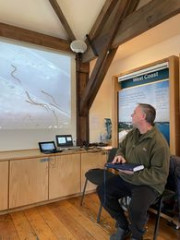
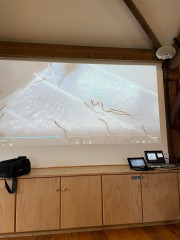
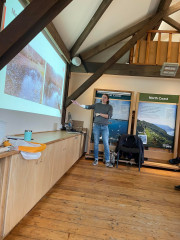
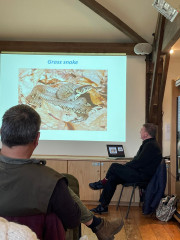
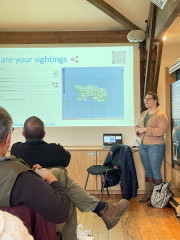
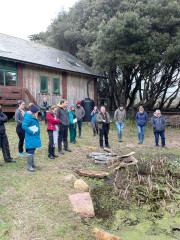
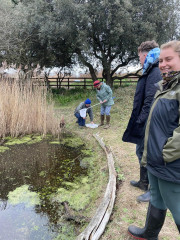
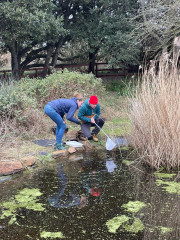
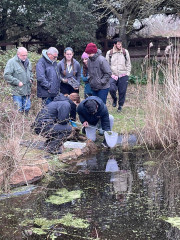
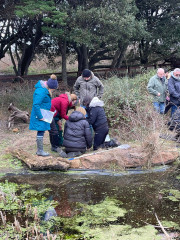
Our 5th annual Pondwatch training event was held at the Frances Le Sueur Centre on Saturday 28th January. It was hosted by the JARG group, and featured presentations from Dr John Wilkinson (ARC UK), Chris on freshwater eels, Adam on level 3 agile surveys and Sarah on recording your sightings, plus the outdoor practical training was filmed by ITV.
 00._Intro_and_Pondwatch_JE_2023.pdf
It's not too late to take part and contribute to the recording of Jersey's freshwater fauna. You can find copies of the presentations, species ID information and volunteer application forms on the Pondwatch section of the website.
10 years of Toadwatch
The Department of the Environment commissioned the Amphibian and Reptile Trust to analyse and prepare a report on 10 years of citizen science data collected under the Toadwatch survey.
Jersey residents were asked to take part in Toadwatch by reporting sightings of toads using ponds. Data has now been collected over 10 years (2005 - 2014).
The analysis has created an up to date toad distribution map for Jersey. It has highlighted features of the Jersey landscape that are most important for toads and suggested areas to create new breeding ponds.
A breakdown of the types of ponds used for toad breeding overwhelmingly supports the suggestion that man-made habitats are critical for the species'' survival in the island. Ensuring these habitats are maintained and connected across the island is considered to be a critical task to conserve our toads into the future
Please find a link to this recently published report on the analysis of the data collected by Toadwatch volunteers since 2005.
http://www.gov.je/Government/Pages/StatesReports.aspx?ReportID=2442
Volunteer field assistants required – radio-tracking the grass snake in Jersey
Background
Currently we are carrying out a PhD on the “Status and conservation of grass snakes Natrix natrix and slow-worms Anguis fragilis in Jersey, C.I.” Records of grass snakes in Jersey are limited with a patchy distribution. Its status is unclear, with little information available on its ecology and population size in Jersey, there is much to be discovered. The grass snake is undoubtedly the rarest of Jersey’s reptiles. Determining the status of the species will provide insight into the need for intervention and species recovery. One of many research objectives are to investigate and model their movements, home range size, and habitat use therefore the ‘Think grass snake campaign’ needs your help.
The position
We require the support of keen volunteers to work alongside our PHD student to carry out this radio-tracking and monitoring. We are looking for people who are able to commit full regular days of independent radio tracking to up to 3 months starting ASAP. This could be 1 day a week or 5?
Volunteer activities will be focused around intensively tracking and, if necessary, searching for grass snakes and recording basic behavioral data in the field. Training will be given in radio-tracking, habitat assessment and understanding grass snake behavior. Volunteers will also be responsible for entering some of the data collected into the field database.
Requirements
Applicants will need to:
§ Have a background in biological sciences
§ Be happy to work outdoors and have some previous herpetology experience
§ Have flexibility, commitment and determination to work, under sometimes uncomfortable or frustrating conditions, combined with good physical fitness
§ Provide careful attention to data recording
§ Be able to commit minimum of 1 day per week for 3 months
§ Be resident in Jersey
§ Have transport within Jersey
This is the ideal opportunity for someone looking for practical conservation experience working with reptiles. If you wish to apply, please contact Rob ward rjw53@kent.ac.uk or telephone 07829968303
Crucial time for grass snakes now
A scientist leading a campaign to save Jersey’s only native snake is asking people to take some simple measures to help the Island’s dwindling grass snake population lay their eggs safely.
Doctoral student Rob Ward of the University of Kent is working with the Department of the Environment on the ‘Think Grass Snake’ campaign, carrying out research on ways to save Jersey’s non-venomous and harmless grass snake.
The grass snake, Jersey’s rarest reptile, relies on warm humid environments, such as those found in compost and manure heaps, to lay and incubate its eggs, so protecting these nesting habitats is an important step in preventing extinction.
June and early July are one of the most important times of the year for the grass snake; the females will have mated in the spring, and are now searching for vital egg-laying sites.
Rob, who’s been tracking grass snakes since the start of spring on various sites in the Island, is encouraging people to keep an eye out for grass snakes that may be using their compost and manure heaps for nest sites, and to report sightings all year round. He is also asking for the piles not to be disturbed until October if possible, to allow the young snakes to hatch after a two month incubation period.
He said: ‘This is one of the most important times of year for grass snakes, as the next generation's chance of survival depends on finding the best conditions. As humans have modified landscapes and habitat over centuries, grass snakes have come to be largely dependent on man-made piles of rotting vegetation, such as compost and manure heaps, to provide the perfect incubation chamber for their eggs.’
Rob continued, ‘Any information from the public, no matter how small or insignificant, is extremely valuable and will make a real contribution to the protection of Jersey’s grass snakes. It all helps build a clearer picture of where they’re living and nesting and how to protect them, and will contribute towards a study which aims to stop the decline of these native reptiles.’
Sightings can be reported through the campaign website www.ThinkGrassSnake.je which has a quick, online survey for submitting sightings. The site provides facts and resources about amphibian and reptiles, and how to encourage them. There is also a dedicated telephone line 441628 (a ‘spotline’) for people to call if they see a grass snake or slow worm.
Report your reptile sightings
The scientist leading Jersey’s Think Grass Snake campaign is calling on Islanders to report any reptile sightings over the next few weeks.
As the days get shorter and the temperature falls, Jersey’s reptiles will soon be searching for places to hibernate over the winter and may not appear again until March or April.
University of Kent researcher Rob Ward, whose work will be instrumental in the future conservation of Jersey’s grass snakes and slow worms, is asking people to send in any reports of grass snakes and slow-worm sightings this month (October) and to keep an eye out in spring for a number of reptiles turning up in the same spot.
The information will build a picture of where our rarest reptiles choose to hibernate. The loss of these sites can have a large effect on local reptile populations.
Mr Ward said: “The more information we have about potential hibernation sites, the more we can do to protect these magnificent but elusive creatures. By recording where reptiles are spotted, we can work out where hibernation may be occurring as sightings start to tail off. Similarly in spring, the first sightings can alert us to the emergence of reptiles from hibernation.”
If you think you may have spotted any going into hibernation, please get in touch with the Think Grass Snake Campaign by calling 0044 1534 441628, or visiting www.ThinkGrassSnake.Je/about
How to tell a possible hibernation spot
- Sites include old rock walls and earth banks, root systems, mammal burrows, piles of debris, and large grass tussocks.
- Hibernation spots are normally in areas that receive some sun to avoid very low winter temperatures.
- Many creatures will share a really good hibernation site and for slow-worms this may mean hundreds all using the same spot.
Factsheets
Factsheets
Amphibian factsheets
Reptile factsheets
Pondwatch JE
Pondwatch JE
What is Pondwatch JE?
Jersey has three native amphibian species, and a host of other wildlife for which ponds are a vital habitat.
Pondwatch JE was launched in 2018 with the aim of using citizen science to help gather sightings of Jersey’s pond life, so we can help assess their conservation status, distribution and habitat requirements. Pondwatch JE is the successor to both the National Amphibian and Reptile Recording Scheme (NARRS) which ran in Jersey from 2007 to 2018 and Toadwatch which ran from 2005 to 2018. During this time volunteers provided a great deal of information which has been used to inform the design of Pondwatch JE as well as influence efforts to protect the species.
Pondwatch JE was launched at the 2019 Wild about Jersey event, you can review the presentation here:
Pondwatch JE training presentation
How can you help?
There are opportunities for everyone to get involved, with 3 levels of surveys depending on your interest, available time and experience.
All surveys take place between January and May.
Check out the training presentations below for an overview of the scheme and to learn more about the pond life you may encounter.
Training: Introduction to Pondwatch JE
Training: Pond Life Identification
Training: Dragonflies
Training: Invasive Non Native Freshwater plants
Level 1 – spend 30 minutes looking for wildlife in ponds and send us your results. No experience or training is required.
2020 Training: Pondwatch JE level 1
 Pondwatch JE level 1 survey form
Level 2 – carry out 5 surveys, each taking 30 to 60 minutes. You will search for amphibians and other pondlife at a pond using three methods; visual searches, netting and night time torch surveys. You do not need experience but you will need to attend a training event.
Training: Pondwatch JE Level 2
Training: Pondwatch JE L2 - Recording your data
Pondwatch JE level 2 survey form
Grassland classifications guide is a summary of the key grassland habitats you may find in your survey area.
This guide is adapted from the UK Habitat Classification (UK Habitat Classification Working Group, 2018)
Level 3 – you will carry out multiple intensive surveys at known and suspected agile frog sites. You will also contribute to testing Jersey’s amphibians for diseases. This is for experienced surveyors only.
All Pondwatch JE surveys take place between January and May.
Water quality tests – you can help us assess the level of pollution in Jersey’s ponds using quick and simple test kits.
Pondwatch JE Water quality handbook
Pondwatch JE Water quality form
Even if you don't have the time to commit to one of these surveys, you can still join in by recording any sighting you have and submit these as a casual record.
Getting started
Before starting your survey you will need to complete a volunteer working agreement and have written consent from the landowner.
Following the instructions in the appropriate level handbook, visit the site and modify the generic risk assessment as required for any risks associated with the site.
 Generic Risk Assessment Template (ARG UK)
ID guides
A number of identification guides and information sources are available for you to download:
A guide to the identification of Jersey amphibians - Amphibians of Jersey ID guide
A guide to the identification of Dragonfly and Damselfly - Dragonfly and damselfly ID guide
A summary of invasive non-native plants and a free e-learning course are available via the links below.
Invasive Non-Native aquatic plant species ID guides
Invasive Non-Native Species free e-learning course
For help with habitat classifications the UK Habitat Classification guidance is available from the ecountability.co.uk website.
Additional resources
Pondwatch JE training presentation
Reptilewatch JE
Reptilewatch JE
What is Reptilewatch JE?
Jersey has four native reptile species, some of which are rarely seen and are limited to certain habitats. Reptilewatch JE is a new project that aims to gather sightings of Jersey’s four native reptile species to help assess their conservation status, distribution and habitat requirements. Reptilewatch JE is the successor to the widespread reptile surveys undertaken as part of the National Amphibian and Reptile Recording Scheme (NARRS) which ran in Jersey from 2007 to 2018. During this time volunteers provided a great deal of information which has been used to inform the design of Reptilewatch JE as well as influence efforts to protect the species.
Reptilewatch JE was launched at the 2019 Wild about Jersey event, you can review the presentation here:Reptilewatch JE training presentation.
How can you help?
There are opportunities for everyone to get involved, with 3 levels of surveys depending on your interest, available time and experience.
All surveys take place between March and October.
Check out the training presentation below for an overview of the scheme and to learn more about the reptiles and other wildlife you may encounter.
Reptilewatch Introduction and Identifying Jersey reptiles
1.Reptilewatch -ID other species.pdf
Level 1 – spend 30 minutes looking for reptiles and send us your results. No experience or training is required.
Reptilewatch JE Training: Level 1
Reptilewatch JE Level 1 survey form
Reptilewatch JE Level 1 handbook
Level 2, option 1 – carry out 6 surveys, each taking 1 to 2 hours. You will search for reptiles along a survey route and check artificial refugia (sheets of roofing material) for reptiles and other species. You will need training at one of our training events but no previous experience is needed.
Reptilewatch JE Training: Level 2
Reptilewatch JE Level 2 widespread reptiles handbook
Level 2, option 2 – carry out 6 surveys, each taking 30 minutes. You will search for wall lizards at known and suspected wall lizard sites. You will need training at one of our training events but no previous experience is needed.
Reptilewatch JE Training: Level 2 Wall Lizard
Reptilewatch Level 2 wall lizard handbook
Reptilewatch Level 2 Wall Lizard survey form
Level 3 – you will carry out multiple intensive surveys at known and suspected grass snake sites. This is for experienced surveyors only.
All surveys take place between March and October.
If you currently do not have time to commit to carrying out these surveys please record any sighting you have and add a casual record.
Getting started
Before starting your survey you will need to complete a volunteer working agreement and have written consent from the landowner.
Please complete and return the volunteer and landowner agreement forms to the Natural Environment Team before you get started.
The next step is to consider the risks associated with your survey and the surrounding area.
Please refer to the Generic risk assessment template and modify this as required.
How to survey
A reminder of the 2020 training presentation is provided here:
For survey guidance, please refer to the relevant handbook for the level of survey you are undertaking.
Additional help on habitat assessment of grassland areas is available from the UK Habitat Classification website: ecountability.co.uk
Reptilewatch JE ID Guides
A series of ID guides are provided to help with identifying the reptiles and other species you might find on your surveys.
Cockroaches of Jersey ID guide
For help with habitat classifications the UK Habitat Classification guidance is available from the ecountability.co.uk website.
Upcoming Events
Upcoming events will be listed here.
Latest News
- 5 years of Pondwatch - training event
26/02/2023 5:28 pm - 10 years of Toadwatch
18/11/2016 1:44 pm - Volunteer field assistants required – radio-tracking the grass snake in Jersey
23/06/2015 11:38 am - Crucial time for grass snakes now
23/06/2015 11:35 am - Report your reptile sightings
17/10/2014 8:38 am
© Jersey Amphibian and Reptile Group (JARG)
Website hits: 38162
View All | Find out how to get a mini-website for your ARG
© ARG UK Local Groups mini-websites 2024
Wind powered websites by Aye-aye Design.